
Identify an Oscoda County Owner
Parcel and deed identifiers give the reliable answer. Oscoda County links both BS&A Online and Beacon through Equalization. BS&A accepts an address or owner name. Copy the 11-digit parcel number first. The hyphenated form appears in results and links assessment, tax, map, and deed research in Oscoda County.
- Enter the street address in BS&A. If it fails, try the owner-name mode or preserve the parcel number from another county record.
- Read the “Property Owner” entry and separate the physical, or situs, address from the address used for owner mail.
- Search that owner in the Fidlar DirectSearch deed index. Inspect the newest transfer into the named grantee.
- If the owner is an entity or estate, keep that exact recorded name. Use state business records or probate filings only to clarify the named party.
Think method, not title opinion. A parcel card supplies the working answer. The latest recorded deed tests it, and the current owner record explains the roll fields and the update gap.
Oscoda County's Property Owner Field
Oscoda County's BS&A record offers a practical owner lead. Its sample card covers 412 N Morenci Avenue. The card shows the parcel number, owner, property address, class, acreage, building facts, and both values. Assessed, taxable, and tax information appear too. A sale price and deed reference do not. That gap matters, because the assessment system names the party tied to the parcel roll while the deed index identifies the instrument that transferred the interest. The official BS&A sample result shows how Oscoda County organizes a parcel card.
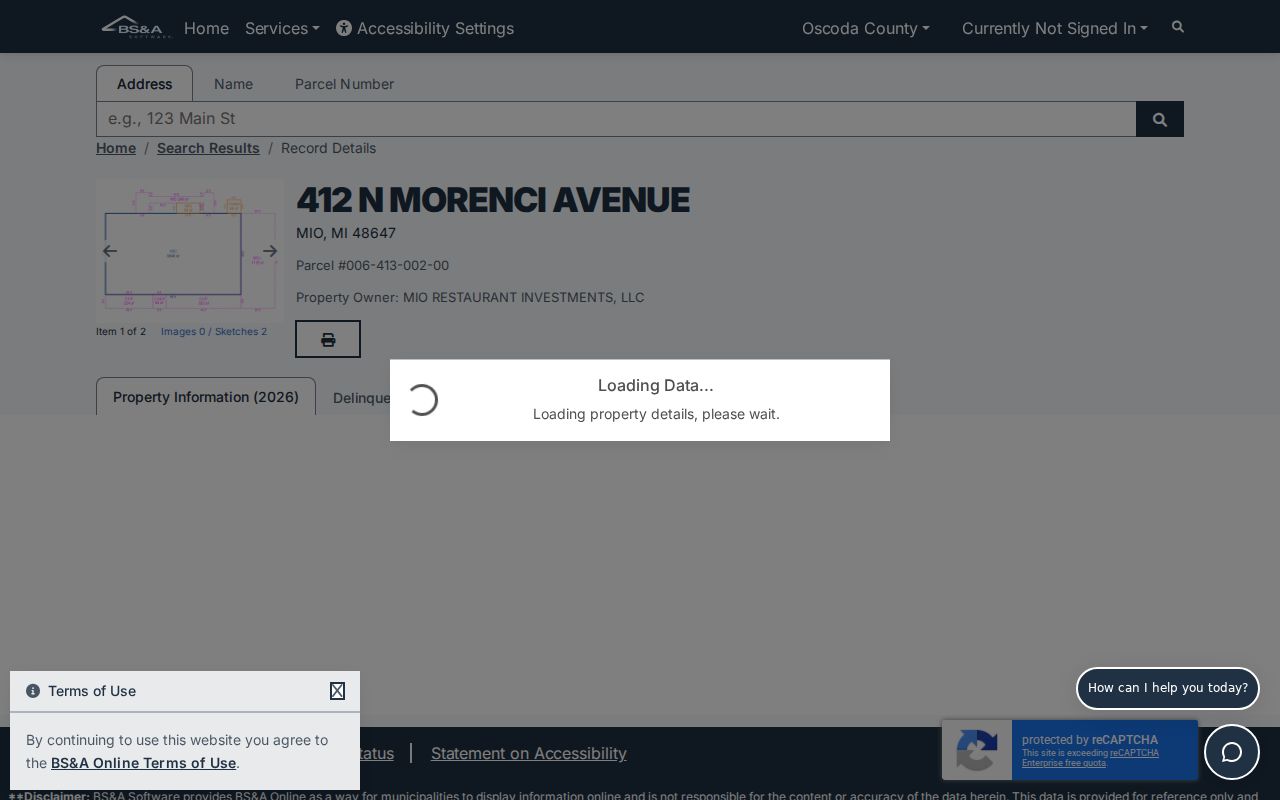
Treat the owner name as a lead. The absent deed reference points to the recorder. Spelling deserves its own care in Oscoda County searches. An LLC may carry punctuation or a suffix, while a trust may appear under a trustee and an estate under a fiduciary. Try the exact roll form first, then a shorter core name. A business registered-office address is not where a person lives.
Separate Oscoda County Owner Addresses
A situs address locates the land. A mailing address tells the tax system where notices go. The two often match. Seasonal property and rural ownership, though, frequently send mail outside Oscoda County. A Mio, Fairview, Luzerne, or Comins postal label creates no city government. Oscoda County has six townships and no incorporated city or village. Township and county records still govern the search.
- Owner of record
- The party named in the assessment roll at the time the record was prepared.
- Grantee
- The party receiving an interest in a recorded deed.
- Situs address
- The physical location used to identify the parcel.
- Mailing address
- The destination used for owner notices; it is not proof of occupancy.
- Title
- The legal ownership interest, which a title search evaluates across recorded and other relevant claims.
Street names change. New structures get new numbers. A parcel split may be hard to trace from a new address alone, so keep the parcel number and legal description beside every owner address in Oscoda County records.
Where Oscoda County Ownership Appears
No one screen answers everything. The assessor roll, recorder index, and parcel map each do a different job. They update on different schedules, so use each source for the fact it is built to show.
| Where Ownership Is Shown | What It Gives | How Current |
|---|---|---|
| BS&A assessment roll | Property Owner, mailing lead, situs, parcel and values | Refresh interval is not published |
| Fidlar deed index | Newest grantee, transfer instrument and legal description | Online documents described as current within five days of recording |
| Beacon parcel viewer | Map-selected parcel linked to assessment facts | Exact live layers and tools were not verified |
| MiBusiness Registry | Entity record when the parcel owner is a company | State business filing record, not land title |
The occupant may not be the owner of record. A family member, caretaker, or beneficiary can be present without appearing as the grantee. Owners can also get mail elsewhere. Who owns the Oscoda County parcel and who stands on it are separate questions.
Trace to Oscoda County's Newest Deed
The Oscoda County Clerk/Register of Deeds receives, indexes, and scans real-estate instruments. Electronic land records run from 1985 to the present. Earlier material lives on office microfiche. Free DirectSearch, pay-as-you-go Tapestry, subscription Laredo, and courthouse terminals all work. If the online service fails, the office sits at 311 S. Morenci Avenue in Mio. Staff make the records available. They will not run a title or document search for a requester.
Start with the newest deed. Compare its legal description with the parcel. The grantee is the receiving party, and a quitclaim, warranty, or fiduciary deed may change how the interest passed. Recorded words beat roll guesses.
Note: Online land documents are described as current within five days, while the assessment roll's update lag is not published.
Oscoda County Estate Owner Clues
A death does not always end in a normal sale. Probate filings and fiduciary deeds often explain why the owner of record changed. So can affidavits filed with the county recorder, or a death record explaining why an expected deed never shows up in the deed records. Start with the property record itself. Then turn to the local court file for the probate transfer.
This approach suits heirs. It also suits anyone tracing a house history, and it keeps sensitive facts in context. Michigan birth records stay closed until they are more than 100 years old. Vital records are also exempt from FOIA under MCL 333.2888. Property records research does not override those limits. So use the land record as your anchor and the vital record only as support.
Protect an Oscoda County Owner Record
A fresh deed in Oscoda County can carry a filing the true owner never signed. Fraud that way is rare, but it happens. The county connects residents to a free alert service that watches new recordings tied to enrolled names. It sends notice when something lands. It cannot block a fraudulent deed or rule on its validity. What it can do is start a review while the ink is still wet. Enroll through the Oscoda County Property Fraud Alert page. That page spells out the county-specific signup steps for property records monitoring.
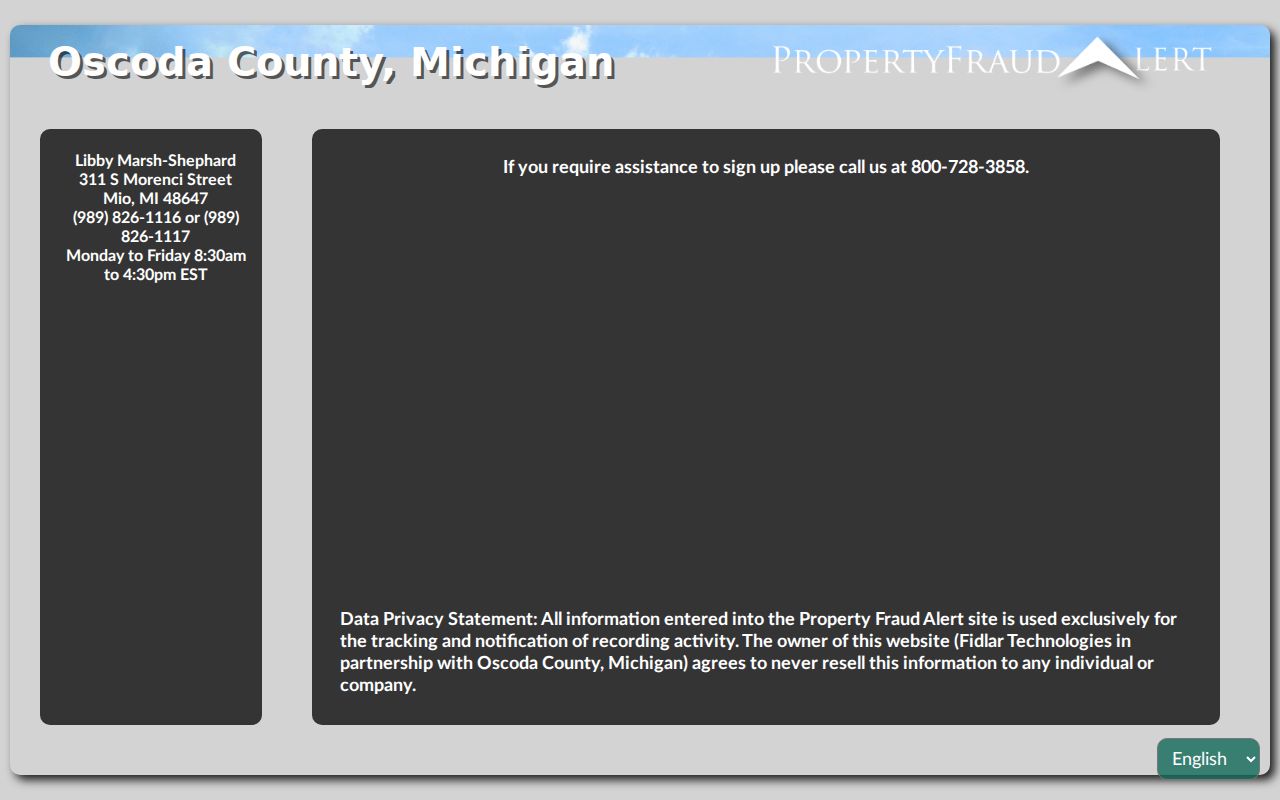
That enrollment screen turns a one-time ownership search into a standing watch over future deed recordings. Telephone signup works too, at 1-800-728-3858.
Limits on Oscoda County Owner Findings
A name alone never settles who owns a property in Oscoda County. The tax roll can lag behind a closing. The listed owner of record may be yesterday's seller. A deed might transfer only part of an interest. A trust or entity can hold title while naming no private beneficiary on the parcel card. A GIS line is not a survey. Remember that too. An owner's mailing address on the property records proves nothing about who actually occupies the site.
Check the record. An assessor name is not a title search. Ownership may rest in an LLC, trust, estate, or interest that needs professional review.
Michigan runs an Address Confidentiality Program. It gives eligible people at risk a substitute address with mail forwarding. Never treat such a designated address as a clue to a confidential location. Keep Oscoda County property records work tied to lawful ends. Those include purchase diligence, boundary questions, estate matters, or civic research. Harassment and stalking are prohibited.