
Read an Oscoda County Property Tax Record
Two records do different jobs. The assessment roll carries values; the tax bill carries charges. Local assessors set parcel assessments. Oscoda County Equalization studies each property class to bring the countywide average to Michigan's standard. For payment, the split matters too. Township treasurers collect ordinary current bills. The county Treasurer handles delinquent taxes after the annual handoff.
| Field | What It Shows | Where |
|---|---|---|
| Assessed value and SEV | Assessment amount under Michigan's 50% true-cash-value framework | Local assessor / Equalization |
| Taxable and capped value | The value base subject to statutory limitation and transfer rules | Assessment record |
| PRE or exemption flag | Whether qualifying tax treatment appears on the parcel | Assessment record and forms |
| Bill and payment status | Summer or winter charge, payment, and delinquency | Township or county Treasurer |
| Parcel and taxing unit | The 11-digit key and the unit responsible for the bill | BS&A, notice, and treasurer |
Assessed value is not a sale-price promise. Michigan starts from true cash value, its market-value concept. It generally assesses at half. The cap can hold taxable value below assessed value. A transfer may uncap taxable value in the following assessment cycle. Even then, the new assessment is not automatically half the purchase price.
Search Oscoda Tax and Assessment Fields
The Oscoda County BS&A hub provides property, tax, sale, and assessing searches. Address, owner name, and parcel number are the documented keys. An address finds the site. Owner queries can return multiple entries. The parcel number gives the cleanest cross-office match.
| Search input | Expected use | Next check |
|---|---|---|
| Street address or address range | Find a physical parcel or bounded road segment | Confirm the township and APN |
| Owner or entity name | Locate assessment entries under the roll name | Separate situs and mailing information |
| 11-digit parcel number | Match the exact tax and assessment record | Use the same key when calling the Treasurer |
The local sample shows parcel, owner, building, assessed, taxable, and tax fields, though not every sale or billing field appears. Treat each visible year label as part of the value and payment evidence.
Oscoda's 50% Assessment Framework
Oscoda County Equalization runs annual sales and appraisal studies for each real-property class. It also audits personal property in the six local units. The county cites MCL 211.34 for an average assessment level at 50% of true cash value. When a class sits above or below that level, equalization can adjust the whole class. It does not set any single parcel's assessment.
The office also calculates Headlee, Truth in Assessing, Truth in County Equalization, and Truth in Taxation rollback fractions. Those are systemwide numbers. They are not a substitute for an owner's challenge to classification, value, taxable value, or exemption status. For a parcel-specific explanation, start with the local assessor named on the notice. The Equalization landing page gathers the county's portal links. It also collects township contacts, forms, and annual reports in one place.
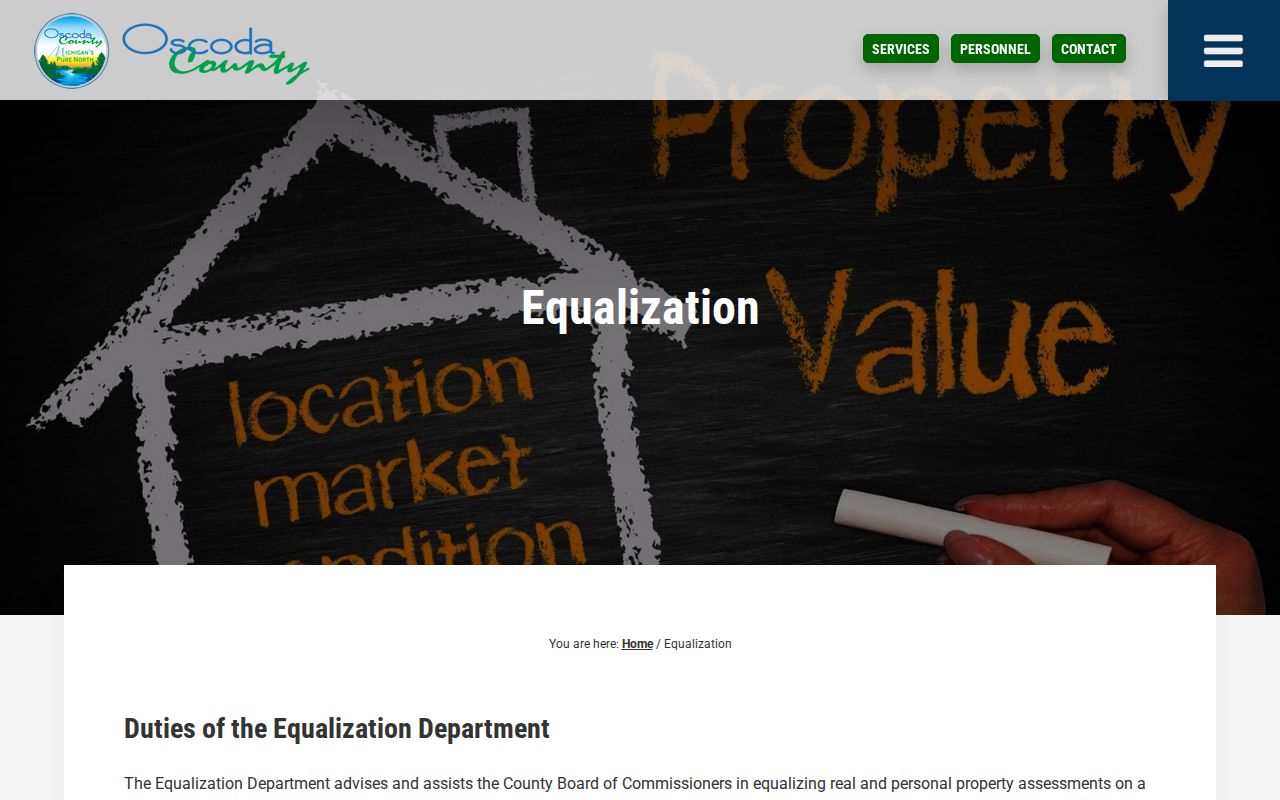
Treat the office page as a routing point for assessment searches and forms. It does not replace the township assessor's individual determination.
Look Up an Oscoda County Tax Bill
First settle whether the bill is current or delinquent. The county has six township collectors. A Mio, Fairview, Comins, Luzerne, or Lewiston mailing line alone does not establish the responsible unit, so confirm the collector before paying.
- Use BS&A by address and copy the complete parcel number and township.
- For the ordinary current bill, contact the township treasurer shown on the bill.
- After March 1, contact the Oscoda County Treasurer and provide the 11-digit APN.
- Compare payment status with assessment-year values and any PRE or exemption flag.
- For a delinquent parcel, read the official forfeiture and foreclosure notices rather than inferring status.
- Assessed value
- Generally one-half of true cash value under the assessment framework.
- Taxable value
- The capped or uncapped base to which authorized millage is applied.
- Principal Residence Exemption
- A qualifying exemption from 18 mills of school operating tax, not an exemption from all taxes.
- Tax lien
- The statutory claim arising from unpaid property taxes and the collection process.
Summer, Winter, and Delinquent Tax Milestones
The county's current schedule sends summer bills July 1 and winter bills December 1. Per its FAQ, summer taxes are due September 14 without interest. Winter taxes are due February 14 without penalty. Anything unpaid moves to the county on March 1 with added charges. The Treasurer page and a separate FAQ word the interest terms differently. So request the current payoff calculation instead of deriving it from a summary.
For the 2026 tax year, the posted timeline runs from a March 1, 2027 delinquency to forfeiture on March 1, 2028 and foreclosure on April 1, 2029. The county states that 2023 delinquent parcels were foreclosed April 1, 2026. Dates are record-year specific. Always match the notice to the correct parcel and tax year.
Note: The County Treasurer lists 989-826-1113, and callers should have the full parcel number available.
The Delinquent-Tax Payment Channel
The county's PayLocalGov portal accepts delinquent-tax payments. It is a transaction screen, not an open property tax records database. Get the correct parcel balance and year from the Treasurer or BS&A before paying.
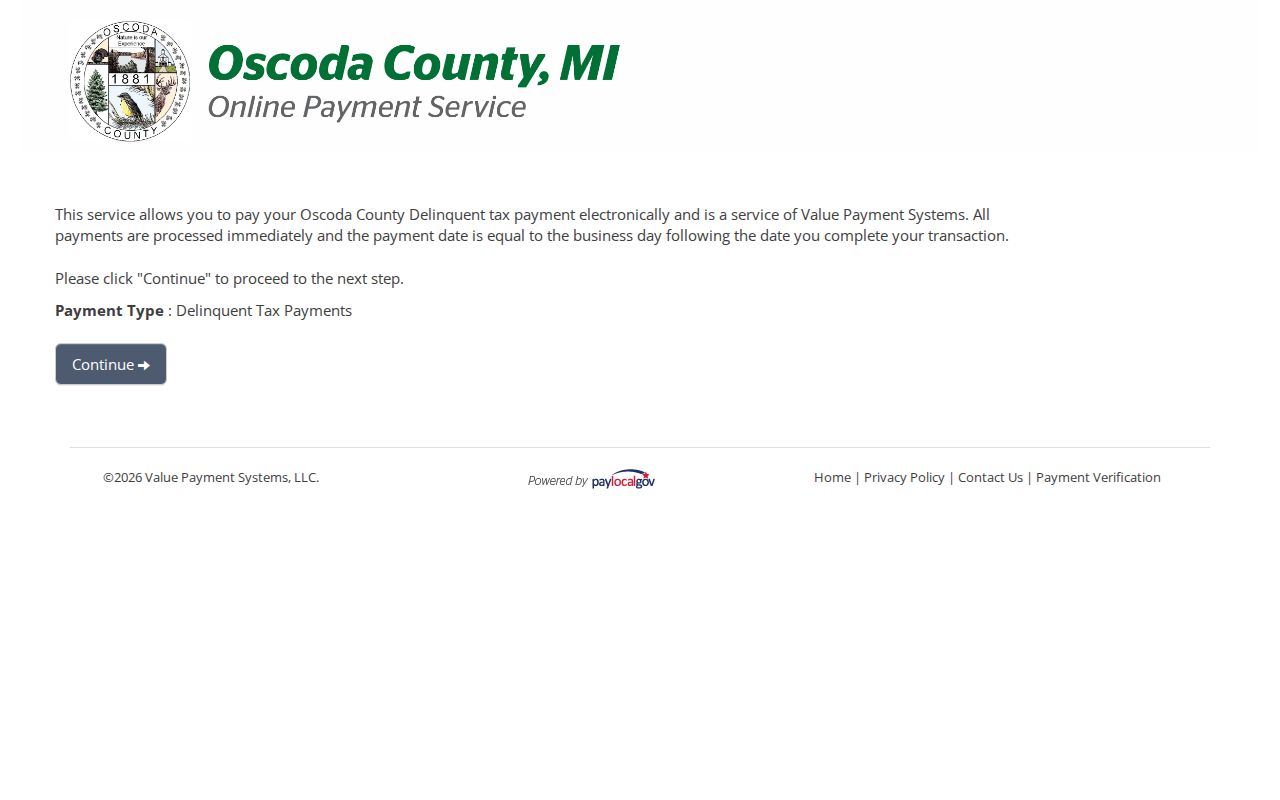
Payment access and record research remain separate tasks. Before assuming an online transaction settles every recorded consequence, confirm the parcel, owner, tax year, payoff amount, and processing status.
PRE, Poverty Relief, and Transfer Forms
Equalization posts several key forms. You will find the Principal Residence Exemption affidavit and rescission form there. The Property Transfer Affidavit, parcel-combination form, and township contacts appear alongside them. The Michigan PRE guidance explains the exemption from 18 mills of school operating tax. It applies to a qualifying principal residence. One bad flag matters. An incorrect PRE entry can raise the bill. This holds true even when assessed and taxable values are accurate.
State law also offers a poverty exemption, applied for annually under local guidelines. Confirm eligibility and documentation with the local assessing unit. A transfer may trigger taxable-value uncapping the next year. The Property Transfer Affidavit supports that administrative update.
Appeal an Oscoda County Assessment
Open the assessment notice as soon as it arrives. Take questions to the local assessor. Do this before the Board of Review session that applies to your parcel. The county's assessment guidance covers several items. It separates assessed value, taxable value, capped value, transfers, PRE issues, and the available appeal routes. Good evidence targets the item actually disputed. That could mean property characteristics, comparable sales, classification, exemption eligibility, or a plain administrative error.
July and December Boards of Review have narrow jobs. They correct qualified errors. They also handle specified exemption matters, per the county guidance, not every valuation dispute. Michigan Tax Tribunal procedure depends on property type and issue. Check the notice and the Tribunal instructions for filing requirements, burden, and fees.
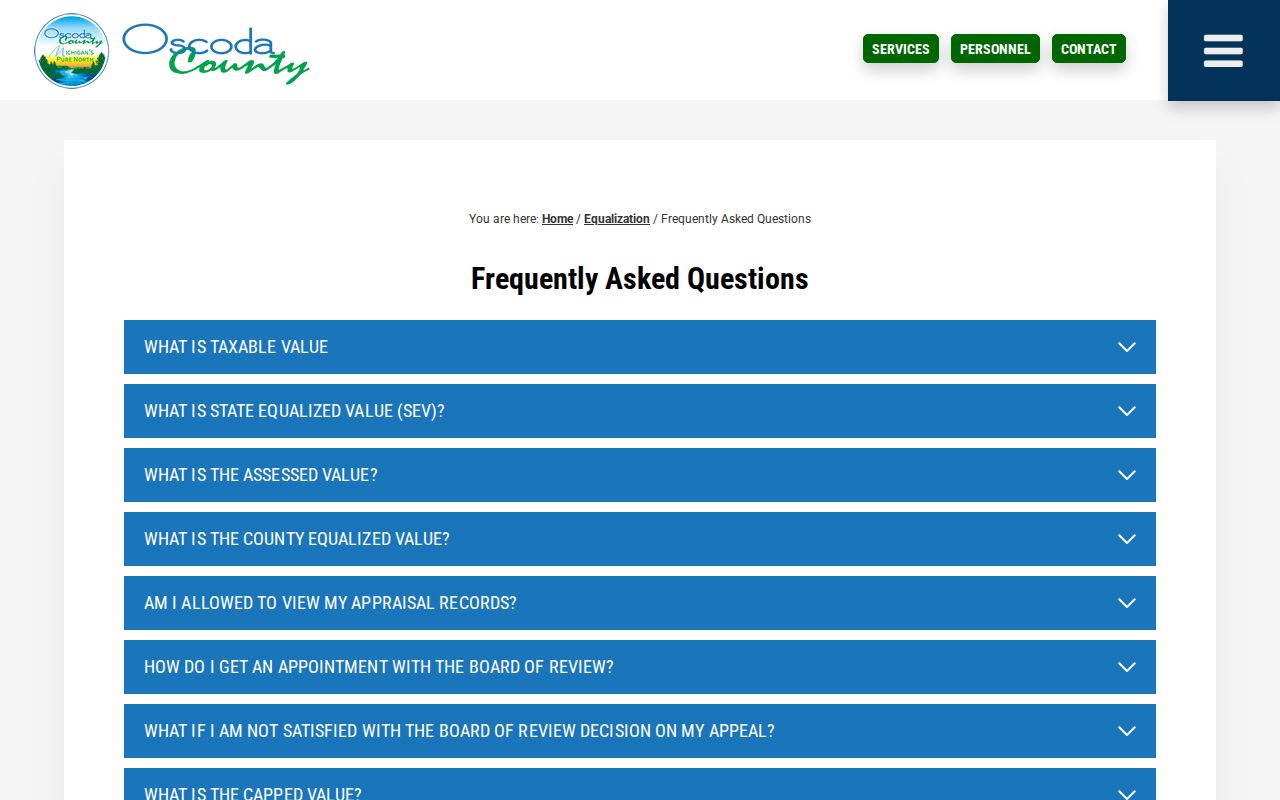
Think of the image as a routing aid. The dated assessment notice still controls a parcel's deadline and local meeting procedure.
Appeal window. Oscoda County does not publish one universal deadline for every township and issue. Follow the date on the assessment notice, verify the local Board of Review schedule, and preserve proof of timely filing.
Tax-Sale Records and Surplus-Proceeds Notices
After July, the county points buyers and researchers to tax-sale.info. A Treasurer printout also lists tax-sale parcels. Public Act 123 sets a demanding notice process before any foreclosure. Two letters go first-class and two by certified mail. A site visit happens in person too. Completed foreclosure is final, with no redemption. So confirm the actual court and deed instruments on any specific parcel.
Oscoda County also joined the Fox/Saginaw surplus-proceeds settlement covering certain pre-2021 foreclosure auctions. The county shows a July 16, 2026 deadline. Former owners or heirs should use the official settlement notice and county records. Avoid any unsolicited fee-based approach.
Historic Oscoda Assessment and Tax Rolls
Old tax rolls open a window on Oscoda County. The Archives of Michigan county guides list assessment rolls covering 1885 through 1935. More runs begin in 1940 and 1960. Delinquent-tax returns survive from 1932 through 1935. A roll can show who was assessed in a given year, the class or description the roll carried, and how a parcel changed over time.
These rolls do not replace a deed chain. Use one to establish a dated tax or occupancy lead. Compare the entry against a plat or a directory. Then verify conveyances in the recorder's books or on microfiche. The distinction matters when an owner name shows up on a tax roll. It can appear before or after the deed index records a transfer.